
The Science Behind Dust Buildup and How to Reduce It
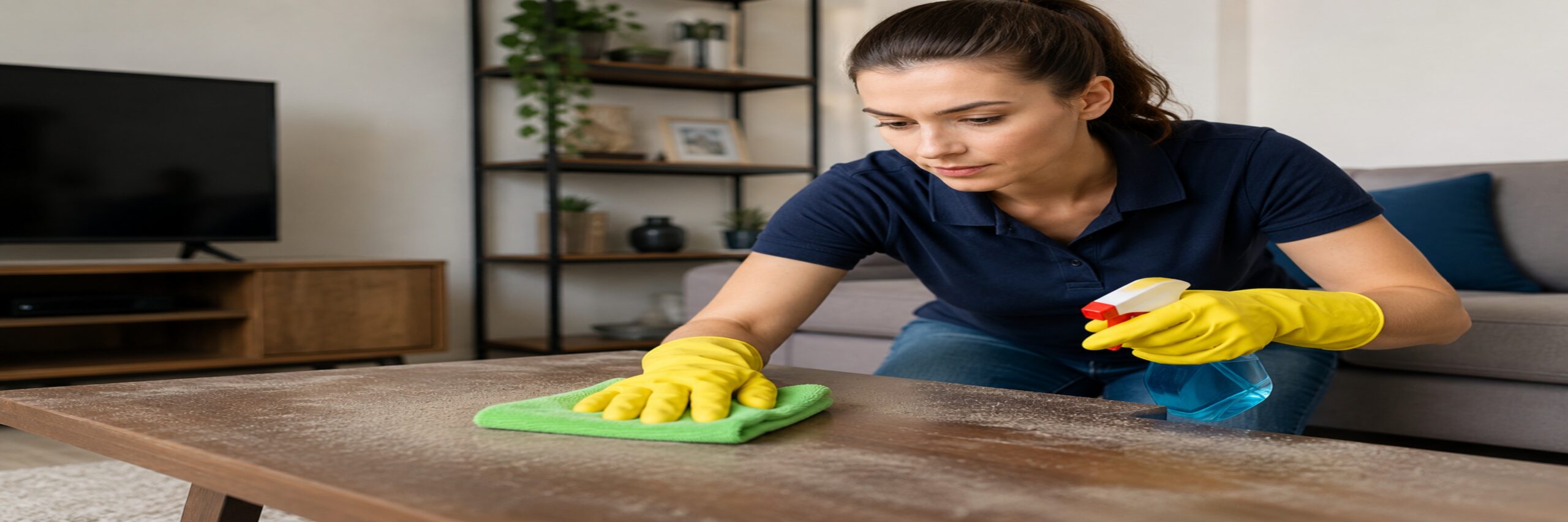
Do you feel like your shelves are already dusty again? Many homeowners have experienced this phenomenon &’ so many times! On all surfaces in your home, dust lands on shelf surfaces, on the floor, on electronic gadgets, and in corners or other concealed spaces. To be sure, a lot of people regard dust as no big deal – but removing dust from your home is essential not only for keeping your indoor air quality high, but for controlling allergy symptoms and just keeping your home looking dust-free. Knowing the science of dust cleanup can help you clean better. “When you understand the source of dust and the reasons for its accumulation, then you can take concrete actions to maintain your home clean longer,” he says.
This post tells you what dust is, why it accumulates in certain areas, and the top dust removal tips to minimise it in your home.
What Dust Is Made Of?
Many people think dust is mere dirt, but it turns out dust is actually a mixture of particles. Other than dead skin particles, dust in the house could contain traces of pet hair, pollen, textile fibres, soil, hair, insect remains, and microscopic pollutants brought in from outside. Human activity is a source of dust. Walking barefoot on the carpet, opening the windows, relaxing on the couch and even making the bed will all create dust particles flying in the air. At last, these airborne particles will become dust all over the house. Dust levels in Australian homes tend to rise in dry seasons and during windy days and bushfires, as fine particles can be blown into the house through the door and windows and also the ventilation system.
Why Dust Settles Everywhere?
Dust particles are in the air all the time. These particles are then pulled by gravity down onto the surface. However, airflow is a major determining factor of where dust settles. Since warm air ascends, air-conditioning vents, ceiling fans, windows and doorways will likely accumulate dust quite rapidly as air moves around the house. Besides, static electricity has a tendency to draw dust particles. Television, computer, and gaming console dustier? Yum. They can attract dust particles because they carry an electrical charge. That could be the reason why entertainment centres seem to be covered with dust all the time, even if you have just cleaned them. It’s a combination of suspended particles in the air, air currents and static electricity that turns the home into a dust paradise.
Common Sources Inside Homes
Some people who clean their homes frequently worry about outdoor dust coming into the home, but a lot of the dust is generated indoors.
The table below provides an overview of typical sources of dust in the home.
| Source | Contribution to Dust |
| Human skin cells | Shed naturally every day |
| Clothing and fabrics | Release fibres during use |
| Carpets and rugs | Trap and release particles |
| Pets | Produce hair and dander |
| Bedding | Collects skin cells and fibres |
| Open windows | Allow outdoor particles inside |
| Shoes | Bring dirt and dust indoors |
By tracking down sources, homeowners will be able to reduce dust accumulation by concentrating on those surface areas producing high levels of dust.
Health Effects Of Dust
Dust actually goes beyond being a simple annoyance of cleaning. It has a direct impact on our health and well-being. People with asthma, allergy or having sensitive respiratory systems can be severely affected by dust particles, leading them to sneeze, cough itchy eyes and even experience nasal congestion. Besides dust mites that live in beds and sofas, they are not only eat causing allergic symptoms.
Small particles in indoor air could cause a decrease in the quality of air. It is well-known that if dust accumulates too much without being cleaned, not only can it cause discomfort, but it may also produce unpleasant effects, mainly when there are pets or the house is not properly ventilated. If dust buildup becomes excessive despite regular cleaning, seeking help from professional cleaning services can be a practical solution to remove hidden dust, improve indoor air quality and create a healthier living environment. Doing a complete cleaning session is usually the best option for A lot reducing these risks, and it also helps in making the house more liveable.
Areas Dust Loves Most
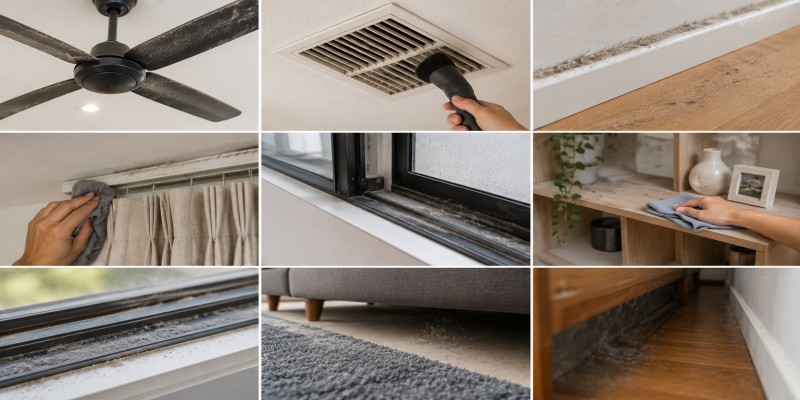
Some sites are much dustier than others. Cleaning dust knows where to go. Finding dust-gathering spots can be of great help for house cleaning efficiency. Infrequent dusting is a major cause of dust build-up on ceiling fans, curtain rods, and the top of shelves and cabinets; what’s more, these objects contain dust on them because they are high up. The particles of dust are then lifted by the air currents to a higher level and ultimately settle out. Soft sofas, beds, rugs and curtains serve as filters and seize dust particles which are in the air the whole day.
Hidden places are really a problem too. Dust is a natural part of life , and it also gathers in cracks and spaces behind furniture, under beds, inside cupboards and under skirting boards, because these are usually the darkest and least cleaned parts of your home. Cleaning these spaces in the home may be the secret to feeling clean in your home.
Effective Dust Removal Tips
Dust control is not as easy as say simply damp dusting now and then. But a good plan can allow you to get rid of most of the dust buildup with a minimum of hassle. An effective dusting is to begin at the ceiling and work down to the floor. In addition to that, the purpose of dusting from top to bottom is also to ensure that you don’t make a mess on already cleaned spaces. Microfiber cloths are best because they trap the particles rather than dispersing them.
However, traditional feather dusters typically just move the dust so that it is levitated in the air. Regular vacuuming with a good vacuum cleaner filter can also help to remove very fine particles from carpets, rugs and soft furnishings, while deep fibre cleaning solutions can help tackle dust and allergens trapped further below the surface. Accumulating tiny bits from the floor and fabric is made easier when you run your vacuum more frequently, particularly if they have good filtration systems. Picking up tiny bits from floors and fabric gets easier when vacuums run often, especially if they filter well. Pets in the house? That usually means more rounds with the machine.
Cleaner air at home
The majority of people who do this, as they say, actually experience a lessening of their allergies if the indoor air is maintained clean. Besides, dust just doesn’t pile up so much in areas where the air is constantly getting purified. What makes the difference? It is the use of an air purifier that has a HEPA filter. Such devices collect tiny particles that are in the air before they settle on the surfaces. Cleaner air often means belongings stay neater longer.
A family member with allergies can benefit significantly from a HEPA filter. It is just as critical to maintain the HVAC unit to keep the dust out of the filtered airflow into the home, or to keep the filter from sending dust back into the home through the HVAC unit.
The following is a table providing facts which can be used by you to make changes in your home to increase the overall quality of indoor air and reduce the amount of airborne dust.
| Method | Benefit |
| HEPA air purifier | Captures airborne particles |
| Regular vacuuming | Removes dust from floors |
| Clean HVAC filters | Improves airflow quality |
| Wash bedding weekly | Reduces dust mites |
| Keep windows closed on windy days | Limits outdoor dust |
| Reduce clutter | Minimises dust collection points |
| Use door mats | Prevents dirt from entering indoors |
Usually the best bet is to combine a couple of these options.
Creating A Dust Control Routine
One approach for regulating dust levels is to set up a cleaning schedule which can guarantee that you never let dust become visible on the surfaces. Open the windows: your first line of defence in fighting dust on your surfaces is opening the windows, or vacuuming at least once a week. It’s also a good idea to schedule deep cleanings that help keep the dust. A dust-fighting to-do list can even help busy families simplify things. In fact, breaking very big tasks into small weekly chores gradually is less stressful for most of the people than trying to clean a big mess one time. Besides, professional cleaning services will also help you clean areas that are hard to reach and with whole-house cleaning tasks which you might not be able to spare the time to do yourself.
Conclusion
Understanding the science of dust collection can be a big aid in its control. Dust comprises bits from sources both indoors and outdoors, and changes are also brought by air movement, static electricity, human activities and others. But the problem of dust doesn’t necessarily require complex solutions. Basic measures like frequent vacuuming, wiping dust with microfibre cloths instead of dry ones, keeping the air filter clean and simply dust removal tips are really very effective. You can also improve overall home cleanliness by learning how to remove hard water stains from shower glass easily. Making use of the top practices today can result in cleaner surfaces, healthier indoor air and joyful homes all year round for Australian homeowners.
Related Posts

A Complete Guide to DIY Essential Oil Cleaners
DIY Essential Oil Cleaner: Natural Home Cleaning Guide Did you ever want to have a…
How to Clean Hard to Reach Areas in Home Without Missing a Spot
Hard to Reach Areas: Easy Home Cleaning Tips Keeping your home clean is only easy…
How to Prepare a Powerful Homemade Window Cleaner?
Have you ever been wondering why your windows are still greasy despite using a cleaner…